How to Scale a Cookie Recipe Without Guessing
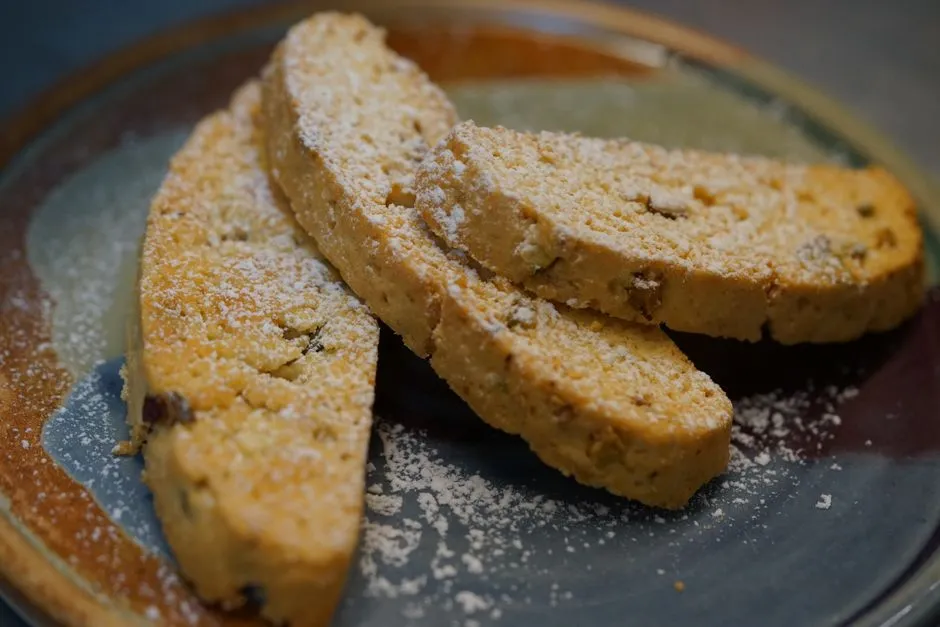
- How do you scale a cookie recipe?
- Are you changing the batch or the cookie?
- How do you calculate the scaling factor?
- What should the ingredient worksheet show?
- How do you measure part of an egg?
- What if the new amounts are too small to measure?
- What should not be multiplied by the factor?
- Which food-safety steps stay unchanged?
- What should you record after the batch?
- Sources
How do you scale a cookie recipe?
To scale a cookie recipe, divide the number of same-size cookies you want by the original yield, then multiply each ingredient by that factor. Check fractional eggs, small measurements, equipment capacity and the full method before mixing. Do not multiply oven temperatures or automatically scale baking times. Follow the recipe's cooking instructions, never taste raw dough, and keep flour and raw eggs separate from ready-to-eat food.
A smaller batch is useful only if the new instructions are clear enough to follow. Doing half the arithmetic in your head while the butter is already in the bowl makes it harder to notice an unchanged teaspoon or a forgotten glaze.
This guide is a home-baking planning method, not a newly tested cookie recipe. Its tables are fictional calculation exercises. They do not provide a complete formula, establish a safe cooking process or promise a particular texture.
Are you changing the batch or the cookie?
Decide this first. Making fewer cookies of the original size is a batch change. Making each cookie smaller, thicker or larger is a shape change as well.
Write down the original recipe's yield and portion instructions together. “Twenty-four cookies” means less without the scoop size, dough weight or shaping description that produced them. For twice-baked cookies, also retain the log dimensions, slice thickness and both baking stages.
Our small-batch almond biscotti illustrates that a cookie count can depend on shaping and slicing, not just dividing loose dough. Do not assume that a larger dough quantity belongs in one thicker log with unchanged timing. Look for the recipe developer's instructions for the new quantity or use repeated batches of the established recipe.
For a first attempt at changing quantity, our editorial recommendation is to keep the ingredient choices and finished portion size unchanged. Changing ingredients, shapes and quantity together leaves you with several differences to investigate if the result is unexpected.
How do you calculate the scaling factor?
Use this relationship:
Scaling factor = desired yield ÷ original yield.
The National CACFP Association's culinary-math explanation describes this factor method and multiplying ingredient amounts by the result. We are applying the arithmetic to a home-baking worksheet, not making a claim about meal-program compliance.
For an original yield of 24 same-size cookies:
| Desired yield | Calculation | Factor |
|---|---|---|
| 12 cookies | 12 ÷ 24 | 0.5 |
| 18 cookies | 18 ÷ 24 | 0.75 |
| 36 cookies | 36 ÷ 24 | 1.5 |
A factor of 0.75 means use three-quarters of each original amount. It does not mean remove three-quarters. Write the factor prominently on your working copy and apply it to every ingredient section.
If the original yield is approximate, your new yield remains an estimate. Arithmetic cannot make a loosely portioned recipe exact.
What should the ingredient worksheet show?
Keep the original and calculated quantities side by side. Include the unit, preparation state and any unresolved measurement question.
Here is an incomplete, invented set of ingredient lines for practising a 0.75 factor. Do not bake this table as a recipe: it omits other ingredients, the method, portion size and cooking instructions.
| Example ingredient | Original quantity | Multiply by | Calculated quantity |
|---|---|---|---|
| Flour | 200 g | 0.75 | 150 g |
| Sugar | 120 g | 0.75 | 90 g |
| Butter | 80 g | 0.75 | 60 g |
| Whole egg without shell | 50 g | 0.75 | 37.5 g |
| Chopped nuts | 40 g | 0.75 | 30 g |
| Baking powder | 1 teaspoon | 0.75 | ¾ teaspoon |
The listed gram quantities total 490 g before scaling and 367.5 g afterward. The check is 490 × 0.75 = 367.5. Neither total includes the teaspoon measurement or represents a complete dough yield.
Preserve wording such as softened, melted and cooled, drained or chopped. The calculation changes quantity, not ingredient preparation. If a recipe contains separately listed dough, filling and glaze, decide explicitly which components the new batch needs and calculate each relevant section.
Check labels for allergens and cross-contact every time you choose ingredients. Reducing a quantity does not remove an allergen, and swapping an ingredient is a separate recipe change.
How do you measure part of an egg?
If the recipe supplies a shell-free egg weight, scale that weight. When it calls for a fraction of a whole egg, combine the yolk and white before measuring the required portion; do not use just the yolk as a substitute for half an egg.
King Arthur's kitchen-scale guide recommends whisking and weighing for a half egg and gives 25 g as its half-large-egg reference. Follow your recipe's specified egg size or gram amount rather than treating that reference as the measured weight of every egg.
In the fictional worksheet, 50 × 0.75 = 37.5 g. That is the target from the stated starting weight. Use equipment capable of measuring the needed quantity; a display that advances only in whole grams cannot display 37.5 g.
Keep whole egg, yolk and white lines distinct when the recipe separates them. Do not combine components that the method needs separately, such as whites reserved for whipping.
Plan for unused egg before cracking it. Keep it covered and promptly refrigerated while you obtain appropriate current storage or freezing guidance; do not return it to its shell or leave it on the counter for an unspecified later use. FDA egg-safety guidance specifies refrigerator storage at 40°F or below, and says whole eggs should be beaten before freezing, not frozen in their shells. Follow that guidance and any product-specific instructions.
What if the new amounts are too small to measure?
Do not turn a calculated quantity into a guessed pinch simply because the worksheet has become inconvenient.
Check your scale's stated range, resolution and instructions. King Arthur notes that some scales perform poorly with very small quantities and discusses higher-precision equipment for that use. More digits on a calculation do not establish that your equipment can measure them accurately.
A hypothetical ¼ teaspoon multiplied by 0.5 becomes ⅛ teaspoon. If you have an appropriate measuring spoon, that is a usable quantity. A result outside your tools' capabilities is a reason to choose a different batch size or a recipe designed for the desired yield.
Keep weight and volume distinct. A gram is not a millilitre for every ingredient, and a teaspoon does not have one universal gram weight. Use the recipe's supplied weights or a reliable ingredient-specific conversion, not a guessed conversion for the whole list.
Our practical preference for an awkward reduction is an established smaller-batch recipe. Buying another measuring tool is not the only solution.
What should not be multiplied by the factor?
Do not multiply the oven temperature, rack position or appliance setting by the ingredient factor. A half batch does not call for half the oven temperature.
Baking time is not an ingredient quantity either. Twelve same-size portions and one much larger piece are different cooking arrangements. Follow the developer's instructions for portion size, pan, temperature and doneness; obtain a suitable recipe if the change makes those instructions inapplicable. Do not declare a batch cooked because a scaled timer has finished.
Plan tray capacity without crowding. If the established spacing allows nine cookies on a particular tray, 27 cookies require three tray-loads at that arrangement. That does not establish that all three trays may bake simultaneously or give a complete elapsed time.
Use cooled baking sheets for subsequent batches unless the recipe specifically directs otherwise. King Arthur's cookie guidance explains that placing dough on a still-hot sheet can cause premature spreading. Follow appliance and tray instructions, use suitable heat protection and keep hot equipment out of children's reach.
Which food-safety steps stay unchanged?
A smaller amount of raw dough is still raw dough. FDA's flour-handling guidance explains that flour and raw eggs can carry harmful bacteria. Do not taste the dough or let children play with it.
Keep raw flour and eggs away from ready-to-eat food. Wash hands and clean bowls, utensils and work surfaces after handling them. Refrigerate dough as directed, and follow the correct cooking temperatures and times in the applicable recipe or package instructions. FDA also warns against home heat treatment as a way to make raw flour safe to eat.
Retain the original cooling, filling and storage instructions when they still apply to the unchanged product. If a change affects those requirements, seek qualified food-safety guidance instead of assigning a universal shelf life. Soft dairy-containing cookies and dry biscotti should not receive one shared storage rule merely because both are cookies.
Commercial production is a separate undertaking. University of Maryland Extension's scaling guidance recommends qualified process-authority involvement for commercial expansion. A home worksheet is not approval for selling, shelf-stability claims or large-scale production.
What should you record after the batch?
Keep the original recipe reference, factor, calculated quantities and actual portion method. Note any differences in equipment, ingredient preparation or dough handling.
After following the complete cooking process and allowing the cookies to cool as directed, record what you observed. “Yield was seventeen at the intended portion size” is more useful than quietly changing the written yield to eighteen. Do not claim that one batch establishes universal performance.
Use those notes to decide whether to repeat the adaptation or return to the original. The biscotti and cookies category and soft-bakes category provide separate starting points. The useful outcome is a complete, readable plan whose arithmetic is checked and whose cooking and safety instructions still fit the food being made.