Small-Batch Almond Biscotti: 12 Crisp Slices
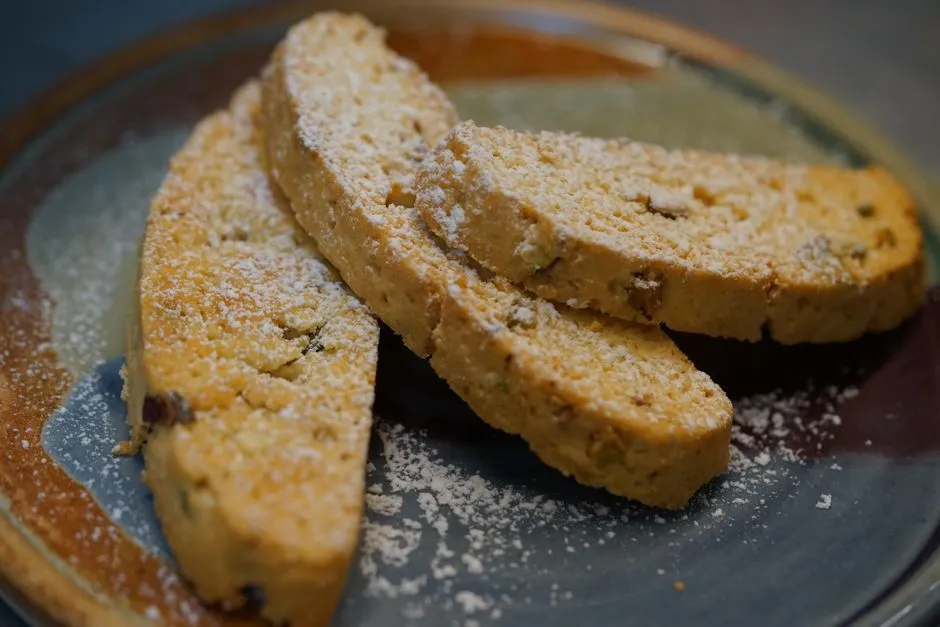
Bake one compact log, then dry twelve slices
This small-batch almond biscotti recipe makes 12 crisp cookies from one 8-inch log. Mix a firm one-egg dough, bake the log until set, cool it briefly, cut 12 slices, and bake those slices again on both faces. The second bake removes moisture; it is not an encore requested by an overly enthusiastic oven.
This is one Italian-American home-baking formula, not a claim about every regional or family tradition.
Ingredients
- 1 cup plus 3 tablespoons (150 g) all-purpose flour
- 1/2 teaspoon baking powder
- 1/4 teaspoon fine salt
- 6 tablespoons (75 g) granulated sugar
- 1 large egg, about 50 g without shell
- 2 tablespoons (28 g) unsalted butter, melted and cooled
- 1 teaspoon (5 ml) vanilla extract
- 60 g (about 1/2 cup chopped) whole almonds, toasted, cooled, and roughly chopped
The recipe contains wheat, egg, dairy, and tree nuts. Check all ingredient labels for allergens and cross-contact. Use another formula rather than casually removing the egg or almonds; both affect structure and yield.
Prepare the oven and dry mixture
Heat the oven to 325°F (165°C). Line a small baking sheet with parchment suitable for that temperature.
Whisk flour, baking powder, and salt until evenly distributed. Break up any flour lumps now; vigorous mixing later can make the baked log tougher.
Browse biscotti and cookies for more small-batch shaping guides.
Mix a firm, slightly sticky dough
Whisk sugar and egg in a medium bowl until blended and a little lighter. Add melted cooled butter and vanilla. Stir in the dry ingredients with a sturdy spoon until only a few flour streaks remain, then fold in the almonds.
The dough should be firm and tacky rather than pourable. If dry pockets remain at the bottom, press and fold them into the dough before adding anything. Different measuring methods are why the gram weights have arrived wearing sensible shoes.
Shape one even log
Transfer the dough to the prepared sheet. With lightly dampened hands or a flexible scraper, shape it into an 8-inch log about 3 inches wide, keeping the thickness even so the center and ends bake together.
After shaping, wash your hands and clean surfaces that touched the raw egg dough; do not taste it.
Complete the first bake
Bake for 25 to 30 minutes, until the log is lightly golden, dry on the surface, and firm when gently pressed near the center. Time varies by oven and exact shape, so use all three cues.
Move the sheet to a rack and let the log cool for 10 minutes. It should be firm enough to slice but still slightly warm. Cutting immediately can crush it; cooling completely can make some crusts more prone to cracking.
Cut exactly twelve slices
Transfer the log carefully to a board. Mark the midpoint, then divide each half into six roughly equal pieces. That produces 6 + 6 = 12 biscotti, each about 2/3 inch thick across an 8-inch log.
Use a sharp serrated knife with a gentle sawing motion, keeping the supporting hand away from the blade path instead of pressing straight down through the almonds.
Bake the cut faces
Place the slices cut-side down on the sheet. Bake for 8 minutes, turn each piece with tongs, and bake the second face for another 7 to 9 minutes. The cookies should feel dry at the edges and lightly colored; they become crisper while cooling.
For a slightly less dry biscotti, use the shorter second interval while still ensuring the cookie is baked through. For a drier result, add 2 to 3 minutes and watch the almonds and edges closely.
Cool and store only when fully dry
Move the biscotti to a rack and cool completely before sealing. Trapped warmth creates condensation and softens the batch. Store in a clean airtight container at room temperature, following current official local guidance and discarding cookies that show moisture damage or spoilage.
Pair the crisp batch with the softer orange ricotta cookies when one tin needs two opinions. Keep the textures in separate containers so the soft cookies do not quietly share their moisture with the biscotti.